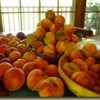
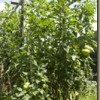
Rosemary Update

Rosemary in bloom Its has already been four years since I first wrote about growing rosemary outdoors up here in the mountains! I still do not know if anyone else grows rosemary outdoors year-round in north-central  West Virginia. But the Creator has given us a treasure in the Rosemary plant with many hygienic, culinary and medicinal uses. Can a plant that loves a hot dry climate and sandy soil survive in a cool damp climate with clay soil?

There is one hurtle to jump in growing Rosemary here. Other than that, I have found our ‘Madeline Hill’ hardy Rosemary an easy-to-care-for herb. No pruning needed, or fertilizing, or watering even in drought, and no disease or insect problems. Harvest is easy, and as a seasoning, a little goes a long way. It even dries quickly for preservation and has a lot more flavor than the who-knows-how-old stuff from the store.

Winter protection is the mysterious hurtle. Protection from constant dampness may be more important than insulation from the cold and wind, at least to a degree. :) The tag that came with our Madeline Hill plant said it would survive –15 F, and I have seen it survive –3 F without protection. Plant it on the south side of a wall or foundation – and if the eves protect it from too much moisture, that is all the better.

If you feel you will need to insulate it, just watch the forecast for dangerous temperatures… and when they have arrived, put a support over the plant and drape something over it like several layers of burlap or blankets. I would recommend a final waterproof layer. It is nice to uncover it in warmer sunnier weather, and it is not too much work to cover it up again once or twice during the winter if needed. I would insulate any rosemary plant in its first winter if the temperature goes below +15 degrees F.

I hope you give it a try!

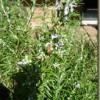
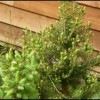
Burlap insulation - the "usual method" - completely covered with burlap over a wire support (2010)Added snow insulation :) Rosemary foliage

Yes, our original ‘Madeline Hill’ plant is still thriving, and we have a 2nd one now. If you are interested, here are some details on winter protection  and survival experiences since the last update

(more…)

Horrah for Hardy Kiwi! 2011 Report

Kiwi, Issai_9-28-2011_2037 Experimenting with hardy kiwi in the mountains of north central West Virginia has been an interesting experience. Also called “kiwi berries”, Actinidia arguta is a species of kiwifruit that grows a smaller, smooth skinned version of the big fuzzy ones we are familiar with in the grocery stores. As its name implies, it is much more winter hardy and that is why we decided to give them a try. It was in 2006 when, with the help of our good friend and expert welder Neil McHenry, we erected the sturdy trellises on a sunny south facing slope and planted the four kiwi vines under them. We had purchased a fruiting vine, a pollinating vine, and two self-pollinating ‘Issai’ cultivars. There was no way I could find out exactly which cultivar the fruiting vine was, but since the nursery did not advertise specific cultivars, I assumed it was the common ‘Ananasnaya’ – or ‘Anna’ for short.

Kiwi, Ananasnaya 5-13-08_IMGA0619 I had read that ‘Issai’ was slightly less hardy than the typical “hardy kiwi” and sure enough, those two vines failed to survive the winter. However the fruiting vine and its pollinator have never had any trouble with winter survival. In a few years the vigorous vine had spread out over the trellis quite nicely and now the two ‘Issai’ kiwi vines have been replaced with two other cultivars. We hope to report on them in the future.

2011 was a special year! Although hardy kiwi can easily survive our mountain winters, they are ready to break dormancy in the spring as soon as they sense warm weather. As a result, our “Anna” vine would always leaf out in early April, get hit by frost, and have to start over again. Even a light frost would blacken the leaves and shoot tips. In past years, whenever the vine bloomed, the flowers were always misshapen or partly black. But in 2011, the vines narrowly escaped all threatening frosts. Apparently the vines were elevated sufficiently on the hill to allow frosty air to drain away from them just enough that they were not affected by the light frosts that occurred occasionally throughout the rest of April and May! The bloom, which began around May 25 was thick and full and fragrant!

Kiwi, Issai_9-28-2011_2033 One more problem. Due to a setback the pollinator vine had almost no flowers on it this year. I could see no way for the fruiting vine to be pollinated well enough to produce a good crop. I did not expect any fruit at all. But as time progressed through the spring and early summer it became obvious that there was going to be a harvest! How was this possible? Could this vine have been self-pollinating? On August 22 I found the fruits full of little black seeds, just like fuzzy kiwi. They were still very hard and far too tart to be edible.

Kiwi, Issai_9-28-2011_2001

Finally came the day of September 12 when I made a quick check of the kiwi vines and noticed that one of the berries was wrinkled like an empty sack. “Must be rotten” I thought. I picked it and some green liquid oozed out. “I wonder what rotten kiwi tastes like.” I touched my tongue to it. Then I licked it. “Wow” I exclaimed, “that’s not kiwi! That’s lime candy!!!” I just about did cartwheels all the way back to the house. I could not wait for everyone else to taste them. When they did, they were amazed at the level of sweetness and flavor “like a mix of grape and kiwi” they said. The skins were a bit leathery with a reddish blush, matching the description of the ‘Anna’ cultivar perfectly.

With the help of Donald, Jonathan, and David, most of the fruit was harvested on September 28. At that time most of the fruits were still hard, but became sweet as they softened at room temperature. Squishier usually meant sweeter. Refrigeration seemed to slow the ripening process so that we were able enjoy them over a long period of time. October 10 was the date of the last harvest, when most of the fruits remaining on the vine had become soft.

Kiwi, Issai_9-28-2011_2011 Kiwi, Issai_9-28-2011_2027 Kiwi, Issai_9-28-2011_2019

Kiwifruit is an astounding source of nutrition (more links here and here) and we praise the LORD for making kiwifruit a possibility for our climate… “Who satisfieth thy mouth with good things; so that thy youth is renewed like the eagle’s” – Psalm 103:5

Remember Spring

Most of you know that I enjoy the fall season. It is the middle of autumn now and we have experienced the joys of reaping what was sown, and drying, canning, pickling… and being pickled (in our own sweat!) :) And of coarse we are looking forward to Thanksgiving, when “the frost is on the pumpkin” and we celebrate the completion of the year. But it is never a bad time to remember back to that time when all things were made new. “Therefore if any man be in Christ, he is a new creature: old things are passed away; behold, all things are become new. And all things are of God, who hath reconciled us to himself by Jesus Christ, and hath given to us the ministry of reconciliation”. 2 Corinthians 5:17-18

Are you reveling in the joy of having peace with God; of freedom from the world and its pride and its lusts? Are you resting in the promise that He will come again and receive you to himself? Are you receiving the grace and the power that he gives to enable us to do His will? “And remember that thou wast a servant in the land of Egypt, and that the LORD thy God brought thee out thence through a mighty hand and by a stretched out arm: therefore the LORD thy God commanded thee to keep the Sabbath Day.” Deuteronomy 5:15 Your deliverance from spiritual Egypt is what I mean by spring, for “he that hath the Son hath life, and he that hath not the Son of God hath not life.” 1 John 5:12.

Spring morning Apple bloomBlooming Alpine Strawberries Lookin down the holler in maple bloom The "far beehives" in April Our house through the dogwoods Hickory Point just before the leaves come out Dogwood in full bloom Sea of buttercups  Tulips in April Yellow Violets Wild Ginger springing up! When Christ Jesus enters the picture, even the littlest things become beautiful!Abide in Me, and I in you. As the branch cannot bear fruit of itself...

A Flare Prayer

“Lord, please make it rain NOW!”

It was hoarse whisper. I was flat on my face, in the grass on the hillside. My left hand grasped my single weapon and I kept my head low. Advances had been made, but the enemy, thoroughly aroused, now swarmed through the area. I had been hit once but thankfully it was a minor wound.

Outnumbered by over a hundred to one, there was only one recourse: the PrAir Force! A “flare prayer” is an urgent petition to God that comes directly from the heart in a desperate situation. In this situation I knew that rain would be the only force guaranteed to drive the enemy forces back into their barracks. And even a brief couple of minutes would be enough time to complete the mission before the deadline.

That morning, my rising time was 3:30. At 5:05 it was time to gear up. My boots were not of military material, just second-grade farm boots. Goggles and ear plugs were enough for head gear. My “weapon” was the weed-whacker, well-fueled.

A few steps up the hill I realized something was wrong. My left boot had a hole just large enough to let in generous amounts of moisture from the dewy grass. I made a quick turnaround, secured boots first-grade, and remounted the hill. Would it be too late? Several minutes later I arrived at the enemy outpost: the far beehives, shrouded in overgrown weeds. It was the weeds, not the bees, that were the actual “enemies” in this scenario. But the bees could be enemies if they wanted to. And if they sensed disruption they would want to. I hoped they had not yet begun their morning drills. It was about 5:30, half an hour before official sunrise. Dark clouds were gathering, all but obscuring the morning sunlight. The deadline was 6:30.

It was barely light enough to see. Lightning flickered in the south. Gingerly I worked my way below the hives to see if there was any sign of activity. To my dismay I saw a blanket of bees covering much of the hive’s front. According to Michael, they are often on the alert early, or even all night long, during the longer summer days. I could hear them too. They were poised for action, itching for enough light to begin their flights. Stooping down so that the silhouette of the hive’s entrance showed against the sky, I discovered that very few were flying. I had a little time.

Mission One was priority: trimming around the hedge of holly bushes. Eleven of them semi-circled the hives at a distance of about 8 feet. Everything was gray but I could make them out. With the weed-whacker humming I circled the first one cautiously. Success! The second one was smaller and harder to see but soon it was done. Three. Four. Now I was directly in front of the hives, in the bees’ flight path, trying to keep low. At about bush number eight it became necessary to stop and cut away some netting from one of the bushes. That took some time. When I finished the hedge it was well past 6:00.

Mission Two. Wearing Michael’s elbow-length bee gloves and encouraged by a light sprinkle of rain, I decided to advance inward and do around the hives themselves. I kept repeating Michael’s words “Those hives are the more gentle hives”, “Those hives are the more gentle hives” . . .

In the same counter-clockwise motion, I began a sweep directly in front of the hives, tilting the weed-whacker to keep the clippings from spraying the hives. I passed the first one then the second—the big one—and the third. At around hive number four came the first sign of trouble: a bee caught in my hair. This can be a harmless occurrence and it is harder for a bee trapped in your hair to actually sting, but it does make that bee angry and it’s a sign that there are probably other bees going into defense mode at the same time. I crouched lower and sped up a little. It didn’t help. I felt a couple more “dive-bombers” hitting my scalp, then a sting on my right leg. I certainly deserved it. To escape I crept away from the hive slowly and flattened myself on the ground. The sprinkle had not been enough! Looking up against the dim sky I could see the ever-present clouds, but also now, dozens of bees. They were not running their simple back and forth flights, they were buzzing about seeking the source of their disturbance. It was hard to believe I had been standing there where the bees now swarmed.

Success in the maneuver required an early approach.They are early risers too.A low position is the position from which we may look up!

What now? Surrender and go home? This job was for Michael. And a sting or two was to be expected. I might never get another morning to take care of this job, let alone an early morning with a chance of rain! If only it would rain! The time was about 6:20. If it rained now there would be enough time to finish the job.

It was also a time to reevaluate my motives. I was confident that if my motives truly were one of a servant, I could trust the will of my Commander in Chief. This was His operation. Certainly He could send help from above. There in the grass I remembered that the success of the mission depends upon my relationship with the One who sent me on the mission.

That is when I prayed “Lord, please make it rain NOW!” A bolt of lightning added quite the dramatic affect. My expectations “brightened”. But then I realized that with the bees in an agitated state it might take a particularly hard rain to dissuade them from pursuing their target. I hadn’t thought of that. So I added: “Please make it rain now, HARD” and then breathed an “Amen”. Hardly was the word out of my mouth when there came another splendid bolt of lightning. The drizzle turned into rain, huge drops of rain, and the rain into a downpour—a downpour you would hardly believe, a downpour I would hardly believe! He did it! He really did it! For me!

I stood up, I picked up the weed-whacker once more and completed the mission. I trimmed behind the hives. I finished in front—their very doorstep! The bees had gone inside! The field was mine! Even “Mission 2” was complete! The last weeds fell. I gathered the netting scraps and jogged home. Inside, the clock read 6:32.

How often in these past months the same scenario has presented itself in various ways. What a different, frustrated person I would certainly be if I didn’t have the smile of the Commander in Chief Whom we have chosen to serve. He finds so many ways to put meaning in our tasks. He transforms the to-do list into a treasure chest of stories: sometimes a wild adventure, sometimes a sense of peace, assurance, and fulfillment. Either way, we may encourage our heart in the Lord, as David did when the going was tough. (See I Samuel 30:6.) The Lord is worthy of our loyalty. He is worthy of everything we have. On His side we can continue our advance, moving onward and upward in the battle.

Activate the PrAir Force in your family. Make prayer a regular thing. Then as you go into the day “Keep your powder dry and a flare prayer at the ready” for any kind of surprise situation may arise. (Do keep your flares in a different pouch than your powder though.)  Remember your Commander as you complete His mission. He is in charge and He is ready always to send help from above.

“As free . . . but as the servants of God” (I Peter 2:16).

Birding Buffalo Calf, Part IV: Arrivals and Departures

April showers bring May flowers—and May Warblers!

Chipping Sparrow (nesting)Like the Vireos, Warblers are small treetop birds better identified by voice than vision. And today’s elusive Tennessee Warbler was a first for me! At first it was only a voice in the woods. But, as He loves to do, the Lord answered a specific prayer and Common Yellowthroat (female)brought an excellent view. It was exactly what was needed for this species. I was able to see it from the right angle and make a positive identification. Then after about half a minute in the open it darted away never to be seen or heard again. It was great. There are some other potential firsts which we have Golden-crowned Kingletonly heard and not seen including the Chestnut-sided Warbler(?), but maybe that will make another story for another time. Every day can hold a surprise in the Wave of Warblers.

All in all, it appears that the Raven, Barred Owl and Field Sparrow are year-round residents—as well as the good old woodpeckers of course.

Departures: Yellow-bellied Sapsucker, Golden-crowned Kinglet, and Slate-colored Junco (last seen April 13). And now, the . . .

 Arrivals to date:

February 15 American Robin Buffalo Calf
March, April Carolina Wren Buffalo Calf
  Hooded Merganser Buffalo Calf
  Canada Goose Buffalo Calf
  Louisiana Waterthrush Buffalo Calf
  Eastern Phoebe Buffalo Calf
  Chipping Sparrow Buffalo Calf
  (Red-winged Blackbird) Big Flint
Mid April Song Sparrow Buffalo Calf
  Northern Cardinal Buffalo Calf
  Eastern Towhee Buffalo Calf
  Turkey Vulture Buffalo Calf
  Red-shouldered Hawk Buffalo Calf
  Broad-winged Hawk Buffalo Calf
  Common Yellowthroat Buffalo Calf
  Turkeys (calling) Buffalo Calf
April 19 Ovenbird Buffalo Calf
April 20 American Goldfinch Buffalo Calf
April 22 American Redstart Buffalo Calf
  Scarlet Tanager Buffalo Calf
April 25 Ruby-throated Hum. Buffalo Calf
  Wood Thrush Buffalo Calf
  Chestnut-sided Warbler? Buffalo Calf
  Blue-gray Gnatcatcher? Buffalo Calf
  Blue-headed Vireo Buffalo Calf
  Yellow-throated Vireo Buffalo Calf
April 26 Red-eyed Vireo Buffalo Calf
  Great Crested Flycatcher Buffalo Calf
April 27 Yellow-billed Cuckoo Buffalo Calf
  (Young bluebirds hatch!) (Buffalo Calf)
  (Whip-poor-will) Big Flint
April 30 (White-eyed Vireo) Fort New Salem
May 1 (Prairie Warbler) Big Flint
May 2 Baltimore Oriole Buffalo Calf
  Rose-breasted Grosbeak Buffalo Calf
May 5 Gray Catbird Buffalo Calf
  Acadian Flycatcher Buffalo Calf
May 8 (Northern Parula Warbler?) Big Flint
  Indigo Bunting Buffalo Calf
May 9 Blue-winged Warbler Buffalo Calf
  Black-throated Blue W. Buffalo Calf
  Yellow-rumped Warbler? Buffalo Calf
  Kentucky Warbler? Buffalo Calf
  Tennessee Warbler Buffalo Calf

A Few Good Links:

Hynes Family News
The Hynes are friends of ours from Virginia who have a passion for discipleship.
Lenspiration
Enjoy viewing top-knotch photography in James Staddon’s photo portfolio

Site Credits:

Header image by Lenspiration, the photography portfolio of James Staddon.

Design by Abundant Designs, the design business of Robert Staddon. Built with Wordpress.